
Table of Contents
ToggleRecreating the feeling of a world-class hotel bedroom isn’t about buying the most expensive furniture. It’s about understanding the layered design decisions that create that effortless sense of calm and indulgence. From precise lighting placement to thread count that actually matters, these spaces are engineered for comfort. The good news? Most of these techniques translate to residential bedrooms with accessible materials and some thoughtful planning. No contractor required, just attention to detail and a willingness to invest in quality where it counts.
Key Takeaways
- A 7 star luxury hotel bedroom prioritizes multi-sensory comfort through consistent temperature control (68–72°F), complete blackout treatments, and engineered sound isolation rather than expensive furniture alone.
- Long-staple Egyptian Giza or Supima cotton with 400+ thread count, paired with down duvets and proper pressing techniques, replicates luxury hotel bedding without premium hotel prices.
- Layered lighting with at least four independent circuits—ambient, task, accent, and decorative—controlled by dimmers creates the precise mood control found in world-class hotel rooms.
- A luxury hotel bedroom layout uses 36-inch walkways around the bed, floated furniture 18–24 inches from walls, and neutral color palettes with texture doing the visual heavy lifting to maximize space and serenity.
- Smart technology like motorized shades, voice-controlled thermostats, and concealed charging ports add convenience while remaining invisible—the hallmark of modern luxury hotel design.
What Defines a 7 Star Luxury Hotel Bedroom Experience?
A true luxury hotel bedroom goes beyond aesthetics, it’s a multi-sensory experience designed around guest comfort. The room temperature stays consistent (typically 68–72°F), blackout treatments eliminate light pollution completely, and sound isolation is engineered into wall assemblies and door seals.
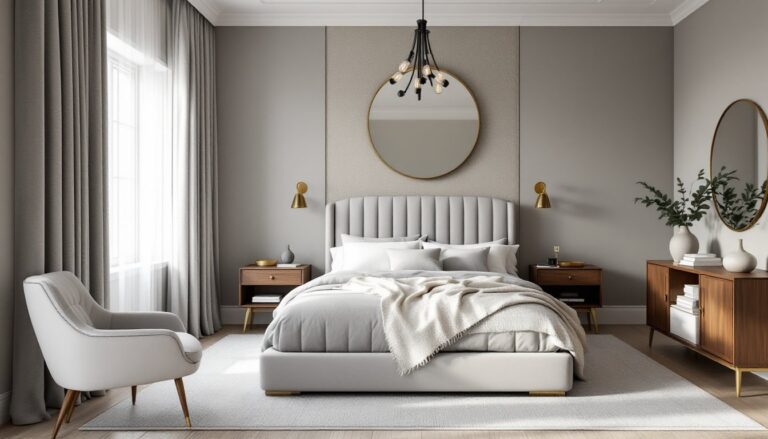
The layout prioritizes intentional zoning. Sleeping areas are distinct from seating or work zones, even in smaller footprints. Walkways around the bed measure at least 36 inches on each side, wider than most residential builds, to create visual breathing room.
Materials follow a tight palette: three to four complementary colors max, with texture doing the heavy lifting. You’ll rarely see pattern overload. Instead, luxury comes from tactile contrast, linen against velvet, matte wood next to polished metal, cool stone paired with warm textiles.
Lighting is always layered with at least four sources: ambient (recessed or cove), task (reading lights), accent (art or architectural highlights), and decorative (statement fixtures). Each circuit operates independently, allowing granular control over mood.
Premium Bedding and Linens That Rival Five-Star Hotels
Thread count is overrated, anything above 400 threads per inch on percale or sateen starts hitting diminishing returns. What matters more is fiber length. Look for long-staple or extra-long-staple cotton (like Egyptian Giza or Supima), which creates smoother, more durable sheets with less pilling.
Hotels use flat sheets in white or neutral tones because they’re easier to launder at high temps and bleach without showing wear. For a home setup, consider:
- Fitted sheet: Percale for cool sleepers, sateen for warmth
- Flat sheet: Optional, but adds that tucked hotel corner aesthetic
- Duvet insert: Down (600+ fill power) or down-alternative hypoallergenic fill
- Duvet cover: Linen or cotton sateen, with hidden button or zipper closure
- Pillows: Two sleeping pillows per person (medium-firm support) plus two decorative euro shams (26×26 inches)
High-end hotels typically use a duvet and coverlet combo. The duvet sits inside a white cover: a decorative coverlet or lightweight quilt layers on top and folds back at the foot. This creates depth and visual interest.
Iron or steam the duvet cover and pillowcases before dressing the bed. It’s tedious, but the crisp finish is what separates a luxury look from a college dorm. Many luxury interiors emphasize this crispness in high-end bedroom photography.
Lighting Design: Layering Ambiance Like the World’s Best Hotels
Hotels never rely on a single overhead fixture. Instead, they build lighting in layers, each controlled separately. Here’s the breakdown:
Ambient lighting sets the baseline. Recessed cans (4-inch or 6-inch aperture) on dimmers work well, spaced roughly 4 to 6 feet apart depending on ceiling height. Cove lighting, LED strips hidden in a soffit or behind crown molding, adds indirect glow without glare.
Task lighting serves function: reading lights mounted 40 to 48 inches above the mattress on swing-arm sconces, or pendants flanking the bed. Use 2700K to 3000K color temperature bulbs to maintain warmth. Avoid cool white (4000K+): it kills the cozy vibe.
Accent lighting highlights architectural features or artwork. Picture lights, narrow-beam track heads, or small LED puck lights work here. Keep wattage low, 5 to 10 watts LED equivalent is plenty.
Decorative fixtures add visual interest: a sculptural pendant, a chandelier with a dimmer, or a statement table lamp on a dresser. These should be beautiful but also functional.
All circuits should tie into dimmers. Install rocker-style or smart dimmers rated for LED loads (standard incandescent dimmers can cause LED flicker). If retrofitting, a licensed electrician can add circuits without major drywall surgery, expect $150–$300 per new switch, depending on access and local rates.
For renters or quick upgrades, plug-in smart bulbs (Philips Hue, LIFX) offer dimming and color temp control without rewiring.
Furniture Selection and Layout for Ultimate Comfort
Start with the bed. A luxury hotel uses a king (76×80 inches) or cal king (72×84 inches) whenever square footage allows. The mattress sits on a solid platform or box spring with legs that elevate the base 6 to 8 inches off the floor, high enough for a vacuum to slide under, low enough to avoid a ladder.
Flank the bed with matching nightstands 24 to 30 inches wide, tops aligned within 2 inches of the mattress height. Each should have at least one drawer (no open shelves that collect dust and clutter).
A bench or upholstered ottoman at the foot of the bed adds function and fills visual space in larger rooms. It’s a landing zone for luggage, extra blankets, or getting dressed.
If space allows, create a seating area separate from the bed: a lounge chair with an ottoman and a small side table. Avoid pushing all furniture against walls, floating a chair 18 to 24 inches from the wall creates depth.
Choose furniture with clean lines and solid construction. Full-grain leather, solid hardwoods (walnut, oak, maple), and metal frames outlast particleboard and bonded leather. Check joinery: dovetail drawers and mortise-and-tenon frames signal quality.
Leave at least 30 inches of clearance around walkways and 36 inches on the bed’s primary exit side. This isn’t just comfort, it’s also code in some jurisdictions for egress.
Luxurious Textures, Materials, and Color Palettes
Luxury hotels stick to neutral bases, whites, creams, taupes, warm grays, and layer in one or two accent tones. This restraint makes the room feel larger and more serene. Bold color comes through in controlled doses: a single accent pillow, artwork, or a throw blanket.
Texture drives visual interest. Combine:
- Smooth: Polished marble, lacquered wood, satin-finish paint
- Soft: Velvet upholstery, linen drapes, wool area rugs
- Rough: Natural stone, raw wood, textured wallcovering
- Reflective: Mirrors, glass lamps, metallic accents (brushed brass, unlacquered bronze, matte black)
Area rugs anchor the space. In a bedroom, place a 5×8 or 8×10 rug under the lower two-thirds of the bed, extending 18 to 24 inches beyond each side. Wool or wool-blend rugs feel plush underfoot and hold up better than synthetic.
Wall treatments add dimension. Designers often use paneling or accent walls in luxury settings, board-and-batten, shiplap, or picture-frame molding painted in the same color as the walls but with different sheen (matte walls, satin trim). This subtle contrast creates depth.
Window treatments should be floor-length, even if windows are shorter. Hang rods 4 to 6 inches above the window casing and extend them 6 to 12 inches beyond each side to make windows appear larger. Use blackout lining on all bedroom drapes, essential for quality sleep and climate control.
Technology and Smart Features for Modern Luxury
Smart tech in luxury hotels is invisible. Guests aren’t fumbling with apps, they’re adjusting temperature from a bedside tablet or voice command, and motorized shades rise on a schedule.
For a home bedroom, prioritize these upgrades:
Smart thermostat: Nest, Ecobee, or Honeywell models allow room-by-room control if paired with remote sensors. Maintaining consistent temp improves sleep quality.
Motorized window treatments: Retrofit kits (like those from Lutron or IKEA’s FYRTUR line) add automation to existing blinds or shades. Program them to close at sunset and open at sunrise. Expect $200–$600 per window depending on size and motor quality.
Integrated charging: Nightstands or lamps with built-in USB-C and wireless charging pads eliminate cable clutter. Alternatively, install in-wall USB outlets (requires electrical work, hire a licensed electrician if you’re not comfortable with circuit breakers).
Sound system: In-ceiling speakers or a high-quality Bluetooth speaker provide white noise or music without visible hardware. Many luxury bedroom designs incorporate concealed audio for seamless aesthetics.
Smart lighting: Phillips Hue or Lutron Caseta systems let you create scenes, “Reading,” “Movie,” “Sleep”, that adjust multiple lights with one command.
If going full smart-home, ensure your Wi-Fi covers the bedroom with strong signal. A mesh system (Eero, Google Nest WiFi) eliminates dead zones that frustrate connected devices.
Avoid visible tech clutter: no TV on the dresser with tangled HDMI cables, no charging bricks sprawled on the nightstand. Route cables through furniture or use cable raceways painted to match trim.
Conclusion
Building a luxury hotel bedroom at home comes down to intentional design: layered lighting, quality materials, restrained color, and smart spatial planning. It’s not about buying the priciest items, it’s about choosing durable, well-made pieces and arranging them with the same attention to detail a professional designer would bring. Focus on comfort, control the details, and the space will reward you every night.