
Table of Contents
ToggleA luxury bathroom vanity isn’t just a place to brush your teeth, it’s the centerpiece of your most private retreat. The right vanity anchors the room, sets the design tone, and combines serious functionality with statement-making style. Whether you’re gutting a dated master bath or building new, choosing a high-end vanity means balancing materials, proportions, storage, and durability. This guide breaks down what actually makes a vanity “luxury,” walks through current design directions, and helps you pick one that fits your space and your daily routine without blowing the budget on trends that won’t age well.
Key Takeaways
- Luxury bathroom vanity designs prioritize solid hardwood construction with dovetail joinery, premium hardware with soft-close drawers, and high-quality finishes like marine-grade lacquer that resist water damage better than basic alternatives.
- Modern minimalist vanities feature clean lines and wall-mounted designs, while classic traditional designs bring warmth through raised-panel doors and furniture-style legs—each luxury style requires specific installation considerations like stud blocking or level floor checks.
- Premium materials such as solid walnut or white oak cabinetry, engineered quartz or porcelain countertops, and hand-hammered copper sinks elevate luxury bathroom vanity aesthetics while offering practical advantages in durability and maintenance.
- Essential luxury features include soft-close undermount drawer glides, integrated electrical outlets and USB ports, organizational inserts, and adequate depth (22–24 inches) to accommodate vessel sinks and thick stone tops without crowding.
- Accurate measurements of wall width, plumbing rough-in distances, and fixture clearances are critical before purchasing—failure to account for existing drain locations or door swings can result in expensive wall modifications.
- Quality luxury bathroom vanities start at $1,200 for basic 48-inch single sinks and exceed $5,000 for custom hardwood doubles with stone; test finish samples in your actual bathroom lighting before committing to ensure materials match your home’s specific light and color palette.
What Defines a Luxury Bathroom Vanity?
Luxury vanities stand apart through construction quality, materials, and attention to joinery, not just price tags or brand names. Look for solid hardwood frames (maple, oak, walnut) rather than particleboard with veneer. Dovetail or mortise-and-tenon joinery holds up far better than stapled corners, especially in humid bathroom environments.
Premium hardware is another giveaway. Soft-close drawers with full-extension undermount glides, solid brass or stainless steel pulls, and concealed European hinges signal real craftsmanship. Cheap vanities use overlay hinges and drawer glides that bind after a year.
Finishes matter too. Hand-rubbed oils, catalyzed conversion varnish, or marine-grade lacquer protect wood and resist water damage better than basic poly coats. Stone countertops should be 3 cm thick (about 1¼ inches), not the thinner 2 cm slabs, and seams should be book-matched when using natural materials like marble or quartzite.
Finally, luxury vanities accommodate plumbing reality. They include reinforced sink mounting, built-in provisions for P-trap clearance, and back panels that allow access without demolishing cabinetry. If you’re doing the install yourself, confirm the unit’s actual dimensions, not just the nominal size, and that it leaves enough room for supply lines and shutoff valves.
Top Luxury Vanity Design Styles for 2026
Modern Minimalist Vanities
Modern minimalist designs lean on clean lines, handleless cabinets, and floating installations. Wall-mounted vanities create visual breathing room and make floor cleaning easier, but require blocking between studs during framing (or retrofitted blocking anchored to studs if you’re upgrading an existing bath).
Materials trend toward matte finishes: blackened steel frames, textured concrete tops, and slab-face cabinetry in warm grays or deep charcoals. Integrated sinks, where the countertop and basin are one continuous piece, eliminate seams and look sharp, though they typically cost 20–30% more than drop-in or undermount basins.
Lighting is critical here. Pair minimalist vanities with backlit mirrors or recessed LED strips to avoid a cold, sterile feel. If your bathroom has limited natural light, add 3000K LED task lighting above or beside the mirror, anything cooler will make skin tones look washed out.
One caution: handleless push-latch doors and drawers can frustrate users with wet hands. Consider recessed finger pulls (routed into the door edge) as a compromise that keeps clean lines but adds grip.
Classic Traditional and Vintage-Inspired Designs
Traditional vanities bring warmth through raised-panel doors, furniture-style legs, and decorative trim. Think freestanding consoles with turned legs, apron-front sinks, and crown molding that matches the rest of the bath. These pieces often double as actual furniture, with drawer organizers, tilt-out trays, and even hidden laundry hampers.
Materials skew toward rich hardwoods, cherry, walnut, mahogany, with stains that highlight natural grain. Marble tops (Carrara, Calacatta) remain classic, but require annual sealing and immediate cleanup of acidic spills like toothpaste or perfume. Vintage-inspired designs often showcase bespoke walnut details that elevate cabinetry into heirloom territory.
If you’re installing a traditional vanity yourself, check the floor for level before setting the piece. Furniture-style legs won’t forgive an out-of-level subfloor the way adjustable cabinet feet will. Use shims and a 4-foot level, then trim shim ends flush and cover with quarter-round or baseboard.
Hardware choices define the look: oil-rubbed bronze or polished nickel for classic elegance, unlacquered brass for a living patina that evolves over time. Unlacquered brass will tarnish and develop character, some homeowners love it, others hate it. Know which camp you’re in before committing.
Premium Materials That Elevate Your Vanity
Solid hardwoods remain the gold standard for cabinetry. Walnut delivers dramatic grain and natural warmth, while white oak offers durability and a neutral backdrop. Avoid “wood-look” veneers on MDF cores in wet environments, even with good edge-banding, moisture will eventually swell the substrate.
Quartzite and natural stone countertops bring one-of-a-kind veining but require sealing and careful maintenance. Engineered quartz (Caesarstone, Silestone) offers similar looks with near-zero porosity and no sealing, though it can’t handle direct heat from curling irons without trivets. Marble is beautiful and traditional but etches easily: reserve it for powder rooms or households that embrace patina.
Porcelain slabs (large-format, thin porcelain) mimic marble or concrete with better stain resistance and lower weight. They’re gaining traction in luxury builds and can span long double vanities without seams. Installation requires experience, porcelain is brittle and cracks under uneven support.
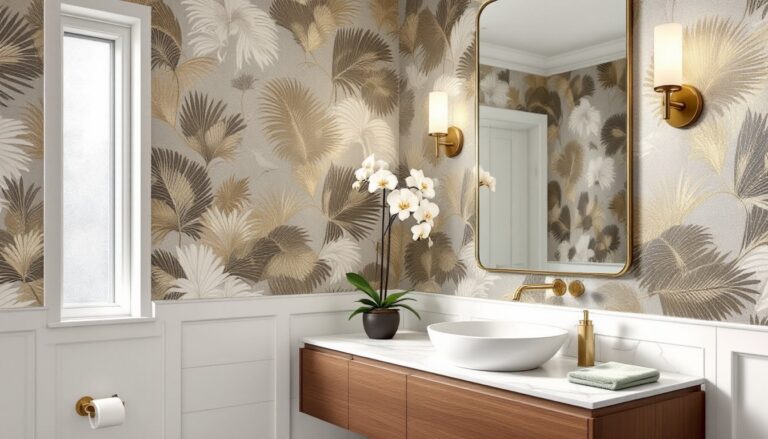
Metal accents, brushed brass legs, matte black steel frames, or stainless waterfall edges, add contrast and modern edge. If mixing metals, stick to two finishes max (e.g., brass hardware with a black frame) to avoid visual clutter.
For sinks, hand-hammered copper and hand-cast concrete bring artisan character but need specific care. Copper develops a living patina and shouldn’t be scrubbed with abrasives. Concrete sinks must be sealed properly on install and resealed annually: skip this and you’ll have permanent water stains.
Essential Features of High-End Bathroom Vanities
Soft-close drawers and doors are non-negotiable in true luxury builds. Undermount drawer glides from Blum or Hettich carry 75–100 lbs per drawer and extend fully for access to the back. Side-mount glides are cheaper and louder, avoid them.
Integrated electrical is a game-changer. Built-in outlets inside drawers (for electric toothbrushes, shavers), USB ports in side panels, and under-cabinet lighting controlled by touch switches all require planning during rough-in. If you’re retrofitting, surface-mount puck lights and plug strips work but look less polished. All bathroom electrical work within six feet of water sources must be GFCI-protected per NEC Article 210.8.
Organizational inserts, cutlery dividers, adjustable peg systems, pull-out hamper bins, turn deep drawers from junk catchers into functional storage. Luxury vanity makers often include these as standard: if yours doesn’t, aftermarket acrylic or wood inserts from Rev-A-Shelf fit most drawer boxes.
Adequate depth and height matter more than most DIYers realize. Standard vanity depth is 21 inches, but luxury units often run 22–24 inches to accommodate vessel sinks or thick stone tops without crowding the backsplash. Counter height should match user needs: 32–36 inches is standard, but taller users often prefer 36 inches (same height as kitchen counters). If you’re building custom, mock up the height with scrap plywood before finalizing.
Ventilation and moisture barriers aren’t glamorous but protect your investment. Use a marine-grade or conversion varnish finish on wood components, install a proper bathroom exhaust fan rated for your square footage (typically 1 CFM per square foot), and ensure the vanity’s back panel allows airflow to prevent mold behind cabinetry.
How to Choose the Perfect Luxury Vanity for Your Bathroom
Start with accurate measurements. Measure wall-to-wall width, then subtract clearances for door swings, toilet proximity (leave at least 15 inches from toilet centerline to vanity edge per IRC R307.1), and any protruding baseboards or trim. Measure height from finished floor to where you want the counter, if you’re replacing flooring, account for new tile or plank thickness.
Match the vanity to your plumbing layout. Moving drain and supply lines is expensive and often requires opening walls. Single-sink vanities typically center the sink: double vanities should space sinks at least 30 inches apart (center to center) for elbow room. Measure your existing plumbing rough-in (distance from wall to drain center) before ordering: most vanities assume a standard 12-inch rough-in but some wall-mount styles need 6–8 inches.
Consider storage versus statement. Floating vanities and open-shelf designs look stunning in luxury mountain homes and design magazines but offer limited storage. If you’re a household of four sharing a bath, prioritize drawer space and closed cabinetry. If it’s a powder room or guest suite, go bold with sculptural legs and minimal storage.
Budget realistically. Quality vanities start around $1,200 for a 48-inch single sink and climb past $5,000 for custom hardwood doubles with stone tops. Add another $300–$800 for professional installation if plumbing modifications or wall reinforcement (for wall-mount units) are needed. Don’t forget the faucet, luxury vanities deserve quality fixtures, and those run $250–$600 for finishes like brushed gold and matte black.
Finally, plan for the install. Vanities over 200 lbs need two people and possibly a furniture dolly. Wall-mount units require locating studs and installing a 2×10 or 2×12 ledger board between studs, lagged into framing with 3-inch construction screws. If you’re not confident working with plumbing shutoffs, supply lines, and P-traps, hire a plumber for hookup, it’s a $150–$300 call that prevents expensive water damage.
Test finishes in your actual bathroom light before committing. Bring home samples of wood stains, stone slabs, and paint chips. What looks warm and inviting in a showroom under halogen spots might read cold under your north-facing window. High-end design magazines like Elle Decor showcase aspirational looks, but your home’s specific light, tile, and wall color will shift how materials appear in real life.