
Table of Contents
ToggleGrey bedrooms have moved far beyond bland hotel neutrals. When done right, grey becomes a canvas for layered luxury, think velvet headboards, brass sconces, and hand-troweled plaster walls that shift tone with the light. The difference between a flat, forgettable grey room and one that feels expensive comes down to intentional choices: the right undertone, texture mixing, and strategic accents. This guide walks through designer-proven strategies to build a high-end grey bedroom, whether you’re repainting an existing space or planning a full renovation.
Key Takeaways
- Grey bedroom ideas work best when built on intentional undertone selection and texture layering, moving beyond flat neutrals to create luxurious depth through velvet headboards, plaster walls, and mixed finishes.
- Choose grey with purpose by testing mid-tone wall colors (LRV 40–50) in your room’s natural and artificial light, then layer lighter and darker shades through trim, textiles, and accent furniture to avoid a monochromatic trap.
- Luxury grey bedroom design requires tactile contrast—mix plush bedding with natural fiber rugs, add Venetian plaster or grasscloth wallpaper, and incorporate solid wood or quality upholstered furniture to signal high-end craftsmanship.
- Incorporate metallic accents like aged brass or blackened bronze in at least three places (lighting, hardware, and decor) to add warmth and glamour without introducing competing colors.
- Layer lighting with dimmers, hardwired wall sconces at eye level, and statement fixtures to transform grey from flat to luxurious, using 2700K–3000K warm white bulbs to prevent grey from feeling cold or institutional.
- Invest in quality foundational pieces—a solid wood bed frame with proper joinery, proportional nightstands (24–30 inches tall), and window treatments in charcoal or slate drapes—rather than budget bedroom sets that lack longevity.
Why Grey Is the Perfect Foundation for Luxury Bedroom Design
Grey works as a luxury base because it’s optically quiet but not emotionally cold. Unlike stark white, which can feel clinical, or beige, which skews traditional, grey anchors a room without competing with statement pieces. It lets materials speak, a live-edge walnut nightstand, a Carrara marble lamp base, or a hand-knotted wool rug all pop against grey walls.
From a practical standpoint, grey hides minor wall imperfections better than white and doesn’t yellow over time like cream tones. It also pairs with every metal finish (brushed nickel, oil-rubbed bronze, polished brass, matte black) without clashing, giving flexibility as trends shift.
The key is choosing a grey with intention. Flat, cool greys can feel institutional. Warmer greys with taupe or greige undertones create coziness, while charcoal or graphite tones add drama when used on an accent wall or ceiling. Test samples in your space under both natural and artificial light, grey shifts more than any other neutral depending on the time of day and your room’s orientation.
Choosing the Right Grey Palette for a High-End Look
Not all greys read as luxurious. The difference lies in undertone and sheen. Cool greys with blue or violet undertones work well in bright, south-facing rooms but can feel stark in north-facing spaces with limited natural light. Warm greys, those leaning toward taupe, greige, or even soft sage, add warmth and pair beautifully with natural wood tones and organic textures.
For wall paint, stick to low-VOC paints in a matte or eggshell finish. Matte hides drywall imperfections and gives a velvety, high-end appearance, but it’s harder to clean. Eggshell offers a subtle sheen and better durability for high-touch areas near light switches or headboards. Benjamin Moore’s “Kendall Charcoal” or Sherwin-Williams’ “Repose Gray” are frequently specified by designers for their balanced undertones that work across lighting conditions.
When building a grey palette, layer multiple shades. Use a mid-tone grey (LRV 40-50) on walls, a lighter grey (LRV 60-70) on trim or ceiling, and introduce charcoal or graphite (LRV 10-20) through textiles, accent furniture, or a feature wall. This tonal layering creates depth without introducing competing colors. Avoid the monochrome trap, pure grey-on-grey can flatten a space. Instead, weave in off-whites, blacks, and natural wood to anchor the palette.
Layering Textures to Add Depth and Sophistication
Luxury grey bedrooms live or die by texture. Flat, single-texture spaces read as budget, no matter the paint color. The goal is to mix tactile contrasts: plush against rough, matte against sheen, organic against geometric.
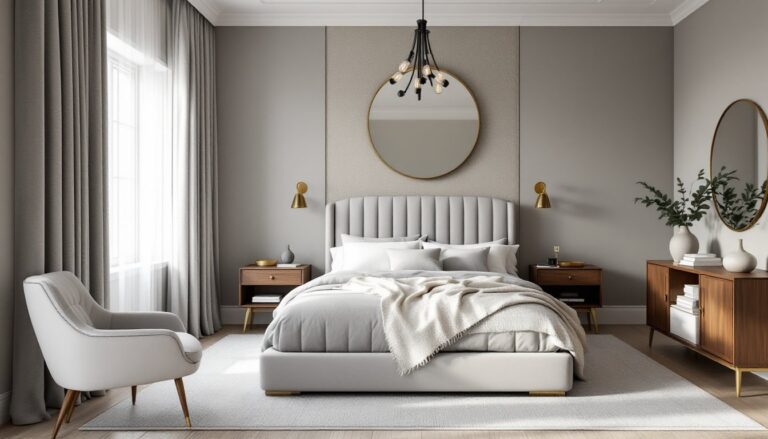
Start with the bed. A velvet or linen upholstered headboard in charcoal or dove grey anchors the room and adds softness. Channel-tufted or wingback styles introduce architectural detail. Layer bedding with a linen duvet cover (naturally textured, breathable, and ages well), Belgian flax sheets, and a chunky knit throw or faux fur accent at the foot. Avoid matchy-matchy bedding sets, mix shades of grey, cream, and white for a collected, lived-in feel.
For flooring, wide-plank hardwood in a grey-washed or weathered oak finish grounds the space and ties into the color story. If you’re working with existing carpet, choose a low-pile wool or wool-blend in a heathered grey, it feels substantial underfoot and hides wear better than synthetics. Add a natural fiber rug (jute, sisal, or seagrass) under the bed for contrast, or go bold with a vintage-inspired Persian rug in muted tones.
Wall treatments elevate the game. Venetian plaster or limewash paint adds subtle movement and depth that standard latex can’t match. Both require some skill to apply (or a pro), but the result is a hand-crafted, European aesthetic. For a DIY-friendly alternative, try board-and-batten wainscoting painted in the same grey as the walls, it adds dimension without color contrast. Grasscloth wallpaper or linen-textured wallcovering on one accent wall introduces organic texture and light-catching variation.
Incorporating Metallic Accents for a Glamorous Touch
Metallics are the jewelry of interior design, they catch light, add warmth, and signal luxury. In a grey bedroom, brass, bronze, and antique gold tones provide the richest contrast, especially against cooler greys. They bring warmth without introducing color, keeping the palette cohesive.
Lighting fixtures are the easiest high-impact swap. Replace builder-grade ceiling fixtures with a chandelier or pendant in aged brass or blackened bronze. Wall sconces flanking the bed (hardwired, not plug-in) add task lighting and architectural detail. Aim for 3000K warm white bulbs, anything cooler will make grey feel sterile.
For hardware, swap out drawer pulls, closet door handles, and curtain rods to a single metal finish. Mixing metals can work, but it requires a confident eye: beginners should stick to one family. Unlacquered brass develops a patina over time, adding character. Polished nickel or chrome leans modern and pairs well with cooler greys.
Mirrors are a designer trick to amplify light and space. A large floor mirror with a thin brass or gilded frame leans against the wall for a casual, layered look. An oversized round mirror over a dresser bounces light and softens the room’s geometry. Avoid cheap frameless mirrors, invest in one statement piece with a metal or carved wood frame.
Don’t overlook small accents: brass picture frames, a gold-rimmed tray on the nightstand, or metallic-threaded throw pillows tie the palette together without overwhelming. The rule of thumb: metallics should appear in at least three places in the room (light fixture, hardware, decor) to feel intentional.
Luxury Furniture and Statement Pieces for Grey Bedrooms
Furniture selection makes or breaks a luxury bedroom. Avoid particleboard or veneer-wrapped pieces, they photograph well but feel flimsy in person. Instead, invest in solid wood or quality upholstered furniture with clean lines and durable joinery.
The bed frame is the room’s anchor. Upholstered platform beds in grey linen or velvet add softness and modernity. Wood beds in walnut, oak, or blackened ash introduce warmth and contrast beautifully with grey walls. Look for mortise-and-tenon joinery or dovetail construction, indicators of quality that outlast cheaper alternatives.
For nightstands, choose pieces with soft-close drawers and substantial proportions. A flimsy 18-inch nightstand next to a king bed looks unbalanced. Aim for 24-30 inches tall (level with or slightly below mattress height) and at least 20 inches deep. Materials matter: marble-topped nightstands, cerused oak, or hand-carved wood feel luxurious. Avoid matchy-matchy bedroom sets, mix a wood nightstand on one side with a metal-and-glass one on the other for collected style.
Seating adds function and visual weight. A tufted bench at the foot of the bed (in grey linen or velvet) provides a landing spot for folded throws or morning coffee. A wingback or slipper chair in a corner with a floor lamp and side table creates a reading nook. These pieces are often featured in high-end interiors for their layered, lived-in appeal.
For dressers and storage, look for solid wood construction with dovetail drawers and full-extension glides. A tall dresser or armoire in a contrasting finish (dark walnut against light grey walls) adds verticality. If space allows, a low credenza styled with art, plants, and decorative objects doubles as a media console or display surface.
Lighting Strategies to Enhance Your Grey Bedroom’s Ambiance
Lighting transforms grey from flat to luxurious. The goal is layered lighting, combining ambient, task, and accent sources to create depth and flexibility.
Ambient lighting starts with overhead fixtures. A statement chandelier or pendant becomes a focal point. Install it on a dimmer switch (a $15-30 DIY swap if you’re comfortable with basic wiring: otherwise, hire an electrician). Dimming lets you shift mood from bright morning light to soft evening glow. For low ceilings, choose flush-mount or semi-flush fixtures in brass or matte black to avoid a cramped feeling.
Task lighting includes bedside lamps or sconces. Hardwired wall sconces free up nightstand space and look more polished than plug-in lamps. Mount them 60-70 inches from the floor (about eye level when sitting in bed) and 18-24 inches apart for even light. Choose swing-arm sconces for adjustability. If hardwiring isn’t an option, cordless LED picture lights or rechargeable table lamps offer flexibility without exposed cords.
Accent lighting includes LED strip lights behind a floating headboard, uplighting behind a floor plant, or picture lights over artwork. These layers add drama and draw the eye upward. Recessed can lights on dimmers provide even ambient light but avoid relying solely on them, they’re flat and commercial without supplemental sources.
For bulbs, stick to 2700K-3000K warm white LEDs. Cool white (4000K+) makes grey feel cold and institutional. Use CRI 90+ bulbs (color rendering index) to ensure fabrics and finishes look true to color. Many design-focused sources recommend testing bulbs before committing, lighting can shift grey’s undertone dramatically.
Window treatments control natural light and add softness. Linen or velvet drapes in a shade darker than the walls (charcoal, slate, or soft black) frame windows and provide blackout capability when layered with cellular shades or blackout liners. Mount rods 4-6 inches above the window frame and extend them 6-12 inches beyond each side for fullness and the illusion of larger windows.
Conclusion
Building a luxury grey bedroom comes down to intentional layering, choosing the right undertone, mixing tactile textures, and balancing metals and materials. Skip the matchy-matchy bedroom sets and invest in a few quality pieces: a solid wood bed frame, well-constructed nightstands, and statement lighting. Test paint samples in your space’s actual light, add dimmers to every fixture, and don’t underestimate the impact of good window treatments. Grey’s flexibility lets the room evolve as tastes shift, making it a foundation worth getting right.