
Table of Contents
ToggleHigh-end hotels don’t just get luxurious bathrooms through marble and tile, they sweat the details. A heated towel rail, a weighty soap dispenser, a brushed brass faucet: these accessories define the space more than square footage ever could. The good news? Creating that resort-level experience at home doesn’t require gutting walls or relocating plumbing. Strategic upgrades to bathroom accessories deliver outsized impact for the investment, transforming a utilitarian space into a daily retreat. This guide breaks down what separates genuinely luxurious bathroom accessories from disposable hardware store finds and how to select, install, and style them for maximum effect.
Key Takeaways
- Luxury bathroom accessories are defined by material quality, manufacturing precision, and timeless design rather than price alone, making solid brass, 304-grade stainless steel, and tempered glass the best investments.
- Premium heated towel rails and electric towel warmers ($400–$900) deliver high-impact visual and functional upgrades without requiring plumbing changes, using only a dedicated 120V electrical circuit.
- Strategic placement and finish coordination—varying accessory heights, grouping by function, and maintaining 12-inch spacing between wall-mounted items—maximize the luxury aesthetic and prevent visual clutter.
- Mixing metal finishes effectively requires selecting one dominant finish (60–70%) with one or two accent finishes, ensuring compatibility between warm metals (brass, bronze) and cool metals (chrome, nickel) to avoid clashing.
- Quality soap dispensers and stone vanity organizers eliminate counter clutter while adding cohesion, with sealed natural stone and all-metal pump mechanisms proving most durable in humid bathroom environments.
- Material selection determines longevity in humid conditions, making solid brass and 304-grade stainless steel superior to zinc alloy, acrylic, and chrome-plated plastic for luxury bathroom accessories that withstand years of use.
What Makes Bathroom Accessories Truly Luxurious?
Luxury in bathroom accessories isn’t about price alone, it’s a combination of material quality, functional precision, and design integrity. A $300 towel bar isn’t luxurious if it loosens from the wall in six months. True luxury accessories share several characteristics.
Weight and heft matter. Pick up a solid brass robe hook versus a hollow zinc alloy version, and you’ll feel the difference immediately. Premium accessories use substantial materials: solid brass, stainless steel (especially 304-grade), natural stone, and tempered glass. These materials resist corrosion in humid environments and maintain their finish over years of use.
Manufacturing quality shows in the details. Luxury pieces feature clean welds, smooth edges, and finishes applied in multiple layers. A proper brushed nickel finish, for example, involves electroplating nickel over brass, then hand-brushing for texture, followed by a protective clear coat. Budget versions skip steps, leading to uneven color and rapid tarnishing.
Functional design separates showpieces from workhorses. A luxurious towel warmer heats evenly across all bars and reaches temperature in under 30 minutes. A premium soap dispenser has a weighted pump mechanism that doesn’t stick or drip. Top-tier shower caddies incorporate drainage channels and adjustable shelving rather than static wire baskets.
Finally, luxury accessories demonstrate timeless design. They avoid trendy gimmicks in favor of proportions and finishes that remain elegant as styles evolve. This doesn’t mean boring, it means considered choices that won’t look dated in five years.
Essential Luxury Bathroom Accessories Worth the Investment
Not all bathroom accessories deliver equal value. These items offer the best combination of daily utility and aesthetic impact.
Premium Towel Warmers and Heated Rails
Hardwired towel warmers rank among the highest-impact luxury upgrades. Unlike plug-in models that clutter outlets, hardwired units integrate cleanly into the wall, typically wired into a dedicated 120V circuit with a timer switch.
Two main types dominate the market: hydronic (hot water) and electric. Hydronic models connect to the home’s hot water system and work well in new construction or major remodels where plumbing changes are already underway. Electric models are easier to retrofit, they require only electrical supply and wall mounting. Most electric towel warmers draw 100-150 watts, less than two incandescent bulbs, making them economical to run on timers.
Installation requires mounting to wall studs with appropriately rated anchors, these units weigh 15-30 pounds when loaded with damp towels. Use a stud finder and verify backing before drilling. If studs don’t align with your desired placement, install a horizontal mounting board (3/4″ plywood works) between studs during wall finishing, or use toggle bolts rated for at least 50 pounds per anchor point.
For finishes, brushed stainless steel and polished chrome resist moisture damage better than oil-rubbed bronze, which requires periodic waxing in high-humidity bathrooms. Expect to pay $400-$900 for quality electric models: hydronic versions run $600-$1,500 plus plumbing labor.
Designer Soap Dispensers and Vanity Organizers
Luxury soap dispensers eliminate plastic bottle clutter while adding visual cohesion. The best models feature all-metal pump mechanisms (avoid plastic internal parts that crack) and wide openings for easy refilling. Wall-mounted dispensers free up counter space, mount them at the same height as light switches (around 44-48 inches) for ergonomic reach.
Material choices matter here. Ceramic dispensers with metal pumps offer the best combination of durability and aesthetics but require careful handling during installation. Solid brass or stainless steel versions are nearly indestructible but show water spots unless finished with oleophobic coatings.
For vanity organization, stone trays (marble, granite, or quartzite) provide stable bases for corralling items without sliding. Choose stones with sealed surfaces, unsealed marble stains from cosmetics and toiletries. Trays should have rubber feet or cork backing to prevent scratching countertops.
Drawer dividers customized to vanity dimensions transform chaotic drawers into organized storage. Bamboo and acrylic dividers work well in moisture-prone bathroom environments. For drawers deeper than 4 inches, consider stacked divider systems that maximize vertical space.
Materials That Define Luxury: Choosing Quality Over Trends
Material selection determines whether bathroom accessories remain beautiful or deteriorate within a few years. High-performing materials handle humidity, temperature swings, and constant contact with water and cleaning products.
Solid brass remains the gold standard for bathroom hardware. True solid brass (not brass-plated zinc) resists corrosion indefinitely and accepts a variety of finishes. When shopping, check product specs for brass alloy composition, quality pieces use C360 or C260 brass. Solid brass accessories weigh significantly more than alternatives: if it feels light, it’s probably plated pot metal.
304-grade stainless steel offers comparable durability without brass’s higher cost. This austenitic steel contains chromium and nickel, making it highly resistant to rust and corrosion. Avoid generic “stainless steel” claims, insist on 304 or 316 grade specifications. Brushed finishes on stainless hide water spots better than polished.
Natural stone adds organic texture but requires understanding its limitations. Marble and limestone need annual sealing with penetrating sealers to resist staining. Granite and quartzite offer better stain resistance naturally. For accessories like soap dishes or tumbler holders, choose darker stones or those with busy patterns that camouflage minor etching from acidic products.
Tempered glass belongs in luxury bathrooms only when it’s substantial, at least 3/8-inch thick for shelves. Thinner glass flexes under load and looks cheap. Beveled edges add a finished look and reduce chip risk. Many designers favor architectural glass details that treat glass as a structural element rather than a fragile accent.
Avoid these materials in luxury installs: zinc alloy (corrodes quickly), acrylic (scratches easily), chrome-plated plastic (finish peels), and MDF with “waterproof” coatings (it isn’t, moisture eventually swells the core).
How to Style Luxury Bathroom Accessories for Maximum Impact
Installing quality accessories is half the job, thoughtful placement and finish coordination complete the luxury effect. Small bathrooms especially benefit from disciplined styling that avoids visual clutter.
Create visual hierarchy by varying accessory heights. Don’t mount everything at the same level, it flattens the space. For example, position a towel bar at 48 inches (about hip height), robe hooks at 60-65 inches, and toilet paper holders at 26 inches from the floor. This staggered approach adds dimension.
Group by function, not by matching sets. Luxury bathrooms often look overly coordinated when every piece comes from the same collection. Instead, select accessories that share a finish family (warm metals, cool metals, or mixed) but vary in design details. A sleek towel bar can pair with a more ornate mirror frame if they’re both brushed nickel.
Respect symmetry where it matters. Double vanities demand symmetrical accessory placement, matching sconces, identical soap dispensers, and centered mirrors. Single vanities allow more asymmetry. But, even asymmetrical layouts benefit from balanced visual weight: if you hang a large framed mirror off-center, balance it with a substantial towel warmer or shelf on the opposite wall.
Mind the spacing. Leave at least 12 inches between accessories mounted on the same wall to avoid a cluttered look. Between a towel bar and the edge of a vanity or tub, maintain 4-6 inches minimum clearance for practical use.
Mixing Metals and Finishes Like a Pro
Mixing metal finishes adds depth but requires restraint. The standard guideline: select one dominant finish (60-70% of metal elements) and one or two accent finishes (30-40% combined).
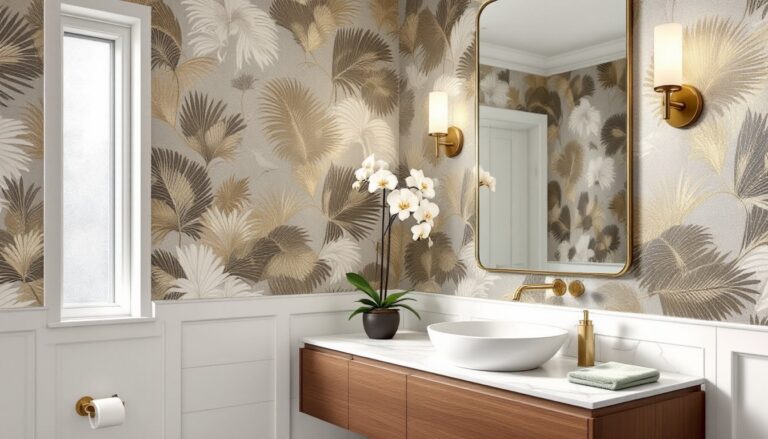
For example, make brushed nickel the dominant finish for towel bars, drawer pulls, and faucets. Add matte black accents through light fixtures and mirror frames. Touch in unlacquered brass for a robe hook or small shelf brackets. This ratio prevents the space from looking indecisive.
Finish compatibility matters. Warm metals (brass, bronze, gold, copper) mix well with each other. Cool metals (chrome, nickel, stainless) likewise pair naturally. Mixing warm and cool works best when one finish dominates heavily, say, 70% brushed nickel with 30% brass accents.
Certain finishes bridge warm and cool tones effectively. Brushed nickel, pewter, and graphite act as neutrals that harmonize with almost any secondary finish. When in doubt, these bridge finishes prevent clashing.
Avoid mixing sheen levels indiscriminately. Polished chrome with oil-rubbed bronze creates jarring contrast. Instead, coordinate sheen: pair polished finishes together (polished chrome with polished brass) or matte finishes together (brushed nickel with matte black).
For remodels where existing fixtures (like tub hardware) can’t be easily replaced, treat those finishes as your starting point. Many high-end bathroom design portfolios show how professionals work around fixed elements by echoing their finishes in changeable accessories.
Maintain consistency across details. If your towel bar has exposed mounting screws in brushed nickel, your toilet paper holder should too. Mixing screw finishes, even on otherwise matching accessories, breaks the luxury illusion. Most quality manufacturers offer finish-matched fasteners for exactly this reason.
Finally, consider how finishes age. Unlacquered brass and copper develop patina over time, which adds character but requires accepting the change. If you prefer consistent appearance, choose lacquered or PVD-coated finishes that resist tarnishing. Many bathroom product lines featured in design sourcebooks now specify finish durability and aging characteristics upfront, check before buying.