Table of Contents
ToggleA great towel does more than dry you off, it makes stepping out of the shower feel like something you actually look forward to. Luxury bathroom towels combine performance, durability, and aesthetics in ways that budget options simply can’t match. They resist pilling, absorb better, last longer, and turn a utilitarian necessity into a small daily indulgence. Whether you’re upgrading a master bath or outfitting a guest suite, understanding what separates a premium towel from a department-store bargain will help you invest wisely and avoid buyer’s remorse.
Key Takeaways
- Luxury bathroom towels distinguish themselves through long-staple cotton (1.5+ inches), high GSM weight (500–700 range), and tight weave density that resist pilling and maintain softness through dozens of wash cycles.
- Egyptian cotton excels in absorbency and plush feel for spa-like comfort, while Turkish cotton offers superior durability, faster drying, and softening with frequent washing, making the choice dependent on your household’s usage patterns.
- The ideal luxury towel weight ranges from 500–650 GSM for most homeowners, balancing absorbency and plushness with practical drying time, though this can vary based on humidity levels and ventilation in your bathroom.
- Proper care—including pre-wash with vinegar, mild detergents, medium-heat drying, and washing every 3–4 uses—can double or triple the lifespan of your luxury bathroom towels and preserve their softness and performance.
- Color, texture, and design details like monogramming, waffle weaves, and coordinated displays elevate luxury bathroom towels from functional items into statement pieces that anchor your bathroom’s overall aesthetic.
What Makes a Bathroom Towel Truly Luxurious?
Luxury isn’t just about price tags. It’s a combination of material quality, construction, weight, and finishing details that add up to superior performance over time.
Fiber quality is the foundation. Premium towels use long-staple cotton (fibers longer than 1.5 inches), which creates smoother, stronger yarns with fewer loose ends. This translates to less lint, better absorbency, and a softer hand.
Weave density matters almost as much as the fiber itself. High-quality towels feature tighter, more uniform loops that resist snagging and maintain their loft through dozens of wash cycles. Cheaper towels often use shorter staples and looser weaves, resulting in towels that mat down or shed excessively.
GSM (grams per square meter) is the metric that quantifies weight and thickness. Luxury towels typically range from 500 to 700 GSM, balancing plushness with drying speed. Beyond 700, towels can feel heavy and take forever to dry: below 500, they feel thin and less absorbent.
Finishing touches like double-stitched hems, reinforced edges, and pre-washed construction reduce shrinkage and fraying. Some manufacturers also use zero-twist yarns or combed cotton, both of which enhance softness and absorbency by aligning fibers more uniformly.
Best Materials for Luxury Bathroom Towels
Not all cotton is created equal. The two most sought-after varieties in luxury towels are Egyptian and Turkish cotton, but other materials, like Pima cotton, bamboo blends, and even linen, are gaining traction for specific use cases.
Egyptian cotton is prized for its extra-long staples (often 1.5 to 2 inches), which produce exceptionally soft, dense fabric. Egyptian cotton towels feel plush and heavy, with superior absorbency. They work best in homes where towels can air-dry fully between uses, as their density means they take longer to dry than lighter alternatives.
Turkish cotton uses long staples as well but is typically spun with a tighter twist, resulting in a slightly lighter, faster-drying towel. Turkish cotton is known for becoming softer with each wash, making it a favorite for households that launder towels frequently. It also tends to be more durable in high-use environments like guest bathrooms or gym bags.
Pima cotton (also called Supima when grown in the U.S.) offers a middle ground: long fibers, good absorbency, and a softer feel than standard cotton, though it’s generally less dense than Egyptian varieties.
Bamboo blends appeal to eco-conscious buyers. Bamboo fibers are naturally antimicrobial and dry faster than pure cotton, but they often lack the plush, weighty feel that defines luxury. They’re a solid pick for humid climates or households prone to mildew.
Linen towels are making a comeback in upscale design circles, particularly in Mediterranean or coastal aesthetics. They’re lightweight, highly absorbent when broken in, and become softer over time. But, linen lacks the immediate softness of cotton and is better suited to those who prioritize texture and style over cloud-like plushness.
Egyptian Cotton vs. Turkish Cotton
The debate comes down to preference and practicality.
Egyptian cotton wins on absorbency and heft. If you want a spa-like towel that feels substantial and indulgent, Egyptian is the go-to. It’s ideal for master baths, low-humidity climates, and anyone who doesn’t mind the longer drying time.
Turkish cotton wins on durability and versatility. It dries faster, holds up better under frequent washing, and softens beautifully with age. It’s the smarter choice for families, guest bathrooms, or homes in humid regions where mildew is a concern.
Both are excellent, neither is objectively “better.” Your choice should reflect how you use and care for your towels.
How to Choose the Right Weight and GSM
GSM is the single best indicator of a towel’s thickness and absorbency. Here’s how the ranges break down in practice:
- 300–400 GSM: Lightweight. Best for travel, gym bags, or beach use. They dry quickly but lack the plush feel of higher-GSM options.
- 400–600 GSM: Mid-weight. A good all-around choice for everyday use. They balance absorbency with reasonable drying time and work well in most climates.
- 600–700 GSM: Luxury weight. Thick, absorbent, and slow to dry. Ideal for master baths and low-humidity environments.
- 700+ GSM: Ultra-plush. These towels feel incredible but can be impractical for daily use. They’re heavy when wet, slow to dry, and may overwhelm smaller bathrooms or crowded towel bars.
For most homeowners, 500–650 GSM hits the sweet spot. It feels luxurious without becoming a laundry burden. If you live in a humid climate or have limited drying space, stay closer to 500. If you prioritize softness and have good ventilation, push toward 650.
Keep in mind that GSM alone doesn’t tell the whole story. A poorly constructed 700 GSM towel can feel worse than a well-made 550 GSM towel. Always check reviews and feel samples when possible.
Sizing and Towel Types for Your Bathroom
Luxury towels come in standard sizes, but dimensions vary slightly by manufacturer. Here’s what to expect:
- Washcloth: 13″ × 13″. Used for face washing or as a guest hand towel.
- Hand towel: 16″ × 30″. Positioned near sinks for drying hands.
- Bath towel: 27″ × 52″ to 30″ × 56″. The workhorse for drying off after showers.
- Bath sheet: 35″ × 60″ to 40″ × 70″. Larger, more enveloping. Best for taller users or those who prefer extra coverage.
For a coordinated bathroom, buy towels in sets that include matching washcloths, hand towels, and bath towels. This ensures consistent color, weight, and texture.
Bath sheets are worth the upgrade if you have the storage and drying space. They provide better coverage and a more spa-like experience, but they also take up more room on a towel bar and require longer drying times.
If you’re outfitting a guest bath, stick with bath towels and hand towels. Guests rarely stay long enough to justify the bulk of bath sheets, and smaller towels dry faster between uses.
Caring for Your Luxury Towels to Maximize Longevity
Luxury towels are an investment, and proper care can double or triple their lifespan. Follow these practices to keep them soft, absorbent, and looking new.
Before first use, wash new towels separately in warm water with a half-cup of white vinegar instead of detergent. This removes sizing and factory residue, which can coat fibers and reduce absorbency. Skip fabric softener entirely, it leaves a waxy buildup that repels water.
Washing: Use a mild, liquid detergent and wash towels in warm (not hot) water. Hot water can degrade fibers over time. Avoid overloading the machine: towels need room to agitate properly. Wash whites and colors separately to prevent dye transfer.
Drying: Tumble dry on medium heat, and remove towels while they’re still slightly damp to prevent over-drying, which weakens fibers. Shake them out before tossing them in the dryer to fluff the loops. If you have the space, air-drying organic cotton towels preserves softness and extends their life even further.
Frequency: Wash bath towels every 3 to 4 uses to prevent bacteria buildup. Hand towels should be washed more frequently, every 1 to 2 days in high-traffic bathrooms.
Stain removal: Treat stains (makeup, sunscreen, etc.) immediately with a dab of dish soap and cold water. Avoid bleach on colored towels, but a diluted bleach solution works on whites if used sparingly.
Storage: Make sure towels are fully dry before folding and storing them. Damp towels develop mildew, which can ruin even the highest-quality fabric. Store in a well-ventilated linen closet, and rotate your towel stock to ensure even wear.
Design Elements That Elevate Your Bathroom Aesthetic
Luxury towels aren’t just functional, they’re a design element that can anchor or accent your bathroom’s overall look.
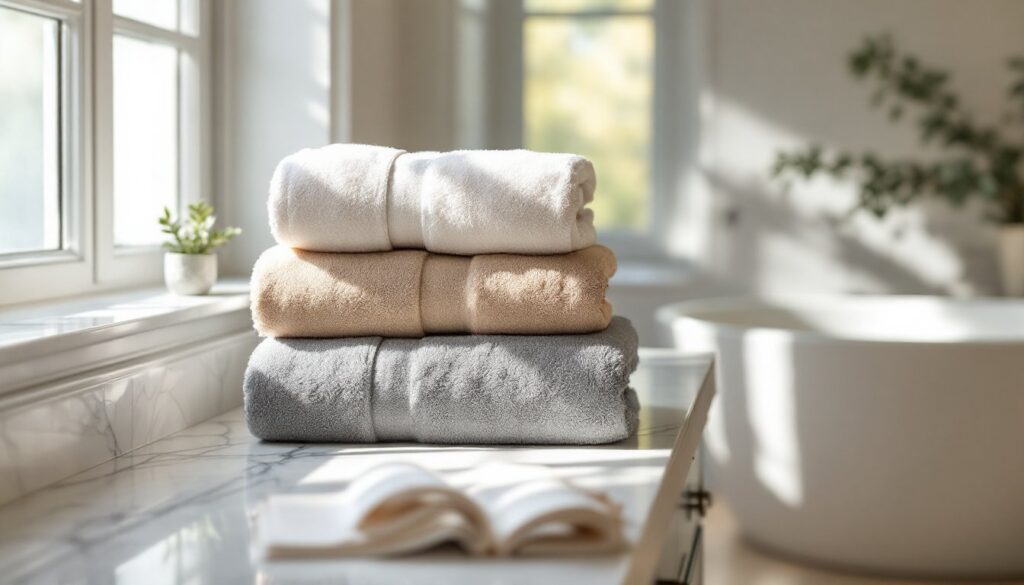
Color is the easiest way to make a statement. Classic whites and neutrals (beige, gray, sand) create a spa-like calm and pair with any decor style. They also hide detergent residue better than darker shades. Bold colors, navy, forest green, charcoal, add drama and work well in modern or eclectic spaces. Just be aware that darker towels may show lint or fading more readily.
Texture adds depth. Consider towels with decorative borders, waffle weaves, or jacquard patterns. These details catch the eye without overwhelming a minimalist aesthetic. Some luxury lines offer ribbed or striped textures that feel contemporary and photograph well if you’re staging a home for sale.
Monogramming is a traditional luxury touch that personalizes towels and discourages “borrowing” if you host frequently. Most high-end retailers offer embroidery services. Keep it subtle, small, tonal monograms look refined: large, contrasting letters can feel dated.
Coordination vs. contrast: Matching your towels to your tile, paint, or vanity creates a cohesive, calming look. Contrasting them (say, charcoal towels against white marble) makes them pop and can serve as an accent color. Both approaches work, just avoid clashing. If you’re unsure, pull inspiration from reputable sources: many home design publications test and review towels in real-world bathroom settings.
Layering: Mix towel sizes and even textures for visual interest. A waffle-weave hand towel paired with plush bath towels adds dimension. Just keep the color palette tight, two to three coordinating shades max.
Finally, display matters. Invest in sturdy towel bars, rings, or hooks that can handle the weight of luxury towels without sagging. Freestanding towel racks or ladder-style displays work well in larger bathrooms and let towels air out between uses.