
Table of Contents
ToggleA modern master bathroom isn’t just a place to brush your teeth, it’s become a personal retreat, a design statement, and often the best ROI room in a high-end renovation. With material costs stabilizing post-2024 and new fixture tech rolling out, 2026 is the sweet spot for upgrading. Whether you’re planning a gut job or a high-impact refresh, the goal is the same: clean lines, quality materials, and a space that feels like a spa without the membership fee. Here’s how to pull it off with choices that actually matter.
Key Takeaways
- Luxury modern master bathroom ideas require a minimum footprint of 100–120 square feet with proper drainage systems, such as sloped mortar beds and linear drains, to prevent mold and subfloor damage.
- Statement fixtures like wall-mounted thermostatic valves, rainfall showerheads, and freestanding soaking tubs (weighing 300–600 pounds when filled) anchor a high-end bathroom design while demanding structural support and careful plumbing planning.
- Large-format porcelain slabs (24×48 inches or larger) with tight grout joints, engineered quartz countertops, and natural stone create sophisticated, seamless surfaces that define perceived luxury and command better resale value.
- Layered lighting with dimmable LED fixtures at warm color temperatures (2700K–3000K), side-mounted vanity sconces, and in-niche accent lighting elevates ambiance and eliminates shadows without requiring major electrical work.
- Modern luxury bathrooms maintain clean, uncluttered lines through planned storage solutions like drawer-based vanities with soft-close slides, recessed medicine cabinets, and floor-to-ceiling built-ins rather than improvised cabinetry.
- Neutral, monochromatic palettes with matte black or brushed brass finishes, low-VOC paints, and one bold accent material choice (book-matched marble or charcoal zellige tile) create intentional, restrained elegance that ages gracefully.
Essential Elements of a Luxury Modern Master Bathroom
Modern luxury bathrooms share a handful of non-negotiables that separate them from standard builder-grade work. First is scale, expect a minimum footprint of 100–120 square feet for a true master suite layout. Anything smaller constrains fixture placement and circulation.
Wet zones need proper drainage and waterproofing. That means sloped mortar beds or foam pan systems under tile, not just a plastic liner. Use a linear drain rather than a center drain for curbless walk-in showers: it simplifies tile work and improves water flow. Install Kerdi or similar waterproof membrane over backer board, skipping this step invites mold and subfloor rot.
Climate control matters more than most people think. A heated floor system (electric mat or hydronic loop) adds $8–$15 per square foot installed but delivers real comfort on tile or stone. Pair it with a humidity-sensing exhaust fan rated for at least 1 CFM per square foot of bathroom area. Code usually requires it: comfort demands it.
Finally, lighting layers: task (vanity sconces), ambient (recessed or surface mount), and accent (in-niche LED strips). A single overhead fixture won’t cut it in a luxury space.
Statement Fixtures That Define Modern Luxury
Fixtures set the tone. Go minimalist and sculptural, not ornate. Wall-mounted faucets and floating vanities free up floor space and simplify cleaning. Look for single-lever thermostatic shower valves with pressure-balance cartridges, they prevent scalding and meet current plumbing codes in most jurisdictions.
Rainfall showerheads (10–12 inches square) deliver the visual drama, but pair them with a handheld wand on a slide bar for practical rinsing. Brands like Grohe, Hansgrohe, and Kohler offer trim kits that share the same finish family, so your valve, spout, and accessories match perfectly. Verify your water heater can sustain flow, most tankless units spec out at 5–7 GPM, which is tight if you’re running a body spray system simultaneously.
Freestanding Tubs as Sculptural Centerpieces
Freestanding soaking tubs anchor a luxury bathroom like nothing else. Expect them to weigh 300–600 pounds when filled, so confirm your floor framing can handle the load, especially in second-story installations. If joists are 2×10 on 16-inch centers, you’re typically fine: 2×8s may need sistering or blocking.
Materials range from acrylic (lightest, retains heat decently, $800–$2,500) to cast iron with enamel (classic, heavy, holds heat best, $1,200–$4,000) to solid surface composites like stone resin (matte finish, modern aesthetic, $1,500–$5,000). Placement near a window works if you have privacy: otherwise, center it as a focal point with a floor-mounted tub filler. Rough-in the plumbing before you set the tub, retrofitting is miserable.
Sophisticated Material Choices for High-End Appeal
Material selection defines perceived quality more than any other decision. Large-format porcelain slabs (24×48 inches or bigger) minimize grout lines and give a seamless, high-end look. They’re also easier to clean than small mosaics. Rectified edges let you use tight 1/16-inch grout joints.
For shower walls, consider 12mm porcelain panels that mimic marble or concrete, they install faster than tile and have fewer seams. Brands like Neolith and Dekton offer UV-stable, scratch-resistant options. On floors, stick with matte or honed finishes to avoid slip hazards: a textured surface with a coefficient of friction (COF) above 0.42 is the ADA guideline.
Natural stone (Carrara, Calacatta, travertine) delivers authentic luxury but requires sealing every 12–18 months. Waterproof grout or epoxy grout helps, but stone will patina over time, some homeowners love it, others don’t. The growing interest in upscale bathroom renovations highlights how stone and high-end tile continue to dominate the luxury segment.
Engineered quartz (Caesarstone, Silestone) works beautifully for vanity tops, non-porous, stain-resistant, available in slabs up to 120 inches. Undermount sinks keep the counter clean and visually uncluttered. Avoid laminate or cultured marble in a true luxury build: the resale perception isn’t there.
Lighting Design That Elevates Your Bathroom Ambiance
Lighting can make or break a bathroom’s atmosphere, and it’s one area where DIYers frequently underinvest. Vanity lighting should be mounted at eye level (60–65 inches to the center of the fixture) on both sides of the mirror, not above it. Side-mounted sconces with frosted or opal glass shades eliminate shadows on the face and provide even, flattering light. Aim for 75–100 watts equivalent (LED) per side in a standard 60-inch double vanity setup.
Use dimmable LED fixtures throughout, color temperature matters. Stick to 2700K–3000K (warm white) for a spa-like feel: anything above 3500K starts to feel clinical. Install a multi-zone dimmer system so you can control vanity, shower, and ambient lighting separately.
For in-shower lighting, use wet-location rated recessed cans or surface-mount fixtures (UL listing required). Placing one directly over the showerhead and another toward the back wall eliminates dark corners. LED strip lighting inside niches or under floating vanities adds a designer touch without major electrical work, just ensure the transformer is accessible for service.
Natural light is gold if you have it. Skylights or large windows transform a bathroom, but they come with privacy and moisture considerations. Use tempered or laminated glass, and add cellular shades or frosted film as needed. Verify flashing details with a roofer if you’re cutting into the roof, water intrusion is the enemy.
Smart Storage Solutions That Maintain Clean Lines
Luxury bathrooms look uncluttered because storage is planned, not improvised. Recessed medicine cabinets set between studs (14.5 inches wide in a standard 16-inch on-center wall) keep counters clear without eating into the room. Pair them with mirrored fronts for double duty.
Drawer-based vanities beat door cabinets every time for accessibility and organization. Soft-close, full-extension drawer slides (like Blum Tandem or Grass) are worth the upcharge. Divide drawers with custom inserts for cosmetics, hair tools, and toiletries, many cabinet shops offer these as add-ons.
For linen and towel storage, consider a floor-to-ceiling built-in cabinet with adjustable shelves. If wall space is tight, a tall tower unit flanking the vanity works well. Specify European-style frameless construction and push-to-open hardware for a seamless, modern look.
In-shower niches should be framed and waterproofed like the rest of the wet area, don’t just cut a hole in the drywall. Size them at least 12 inches wide × 24 inches tall, and tile the interior with matching or accent material. Adding a slight pitch to the bottom shelf prevents water pooling.
Color Palettes and Finishes for Contemporary Elegance
Modern luxury bathrooms lean into neutral, monochromatic palettes with texture doing the heavy lifting. Whites, grays, blacks, and warm taupes dominate, often layered in varying tones, think honed Carrara tile, matte black fixtures, and white oak vanity. This isn’t boring: it’s intentional restraint.
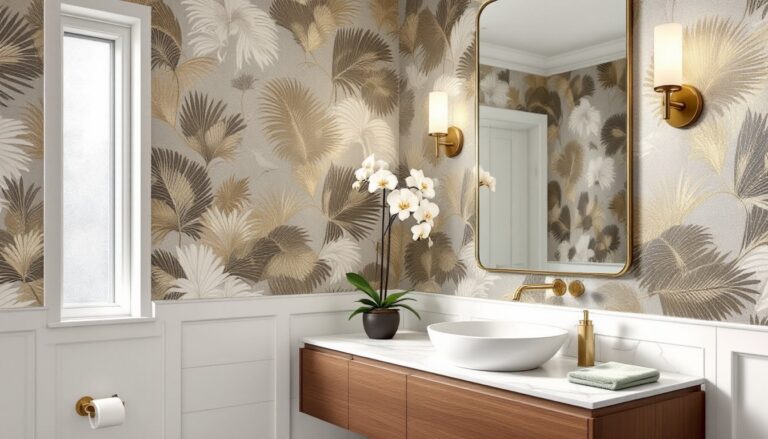
Matte black and brushed brass are the finish leaders in 2026. Matte black (PVD-coated for durability) pairs beautifully with white tile and concrete-look surfaces. Brushed brass or champagne bronze adds warmth without the high-polish glare of polished brass. Keep finishes consistent across faucets, hardware, lighting, and accessories, mixing metals works in editorial spreads but rarely in real life.
Accent walls are back, but done with restraint. A single slab of book-matched marble behind the tub, a charcoal zellige tile in the shower, or a wide plank wood-look porcelain on one wall can define a zone without overwhelming the space. Many designers featured on interior design platforms showcase how one bold material choice can anchor an entire room.
Grout color impacts the final look more than most homeowners expect. Use matching or close-to-tile-color grout for a seamless appearance, or go charcoal gray for definition and practicality, it hides staining better than white. Epoxy grout is pricier but stain-proof and ideal for shower floors.
For cabinetry and millwork, specify low-VOC or zero-VOC finishes, air quality matters in a small, often-humid room. Semi-gloss or satin sheen paints (like Benjamin Moore Aura Bath & Spa or Sherwin-Williams Emerald) resist moisture better than flat. Current trends in high-end residential design continue to favor organic materials and restrained color palettes that age gracefully.