
Table of Contents
ToggleCreating a modern luxury bedroom isn’t reserved for penthouse dwellers or celebrity homes. With strategic design choices and a clear understanding of what defines contemporary elegance, any homeowner can transform their master bedroom into a sophisticated retreat. This isn’t about throwing expensive furniture at a problem, it’s about intentional decisions around materials, lighting, color, and texture that work together to create a cohesive, high-end aesthetic. Whether you’re planning a full remodel or working with what you’ve got, the principles of modern luxury design are accessible, practical, and surprisingly achievable on a range of budgets.
Key Takeaways
- Modern luxury bedrooms prioritize quality materials, clean lines, and negative space over ornate furnishings, making sophisticated design achievable on various budgets.
- Effective lighting layering with separate controls for ambient, task, and accent lighting is the most impactful element in creating a high-end bedroom atmosphere.
- Neutral color palettes anchored by premium paints paired with textured, natural materials like solid hardwood, natural stone, and organic textiles build richness without clutter.
- DIY upgrades including accent walls, custom closet systems, statement lighting, and hardwood flooring can transform a modern luxury bedroom for $1,500–$4,000 in material costs.
- Quality bedding with 300–400 thread count percale and layered textures—not high thread-count marketing claims—delivers the tactile luxury that matters nightly.
- Proportional furniture selection with adequate clearance around the bed and minimal decor creates the serene, uncluttered sanctuary that defines modern luxury design.
What Defines a Modern Luxury Bedroom?
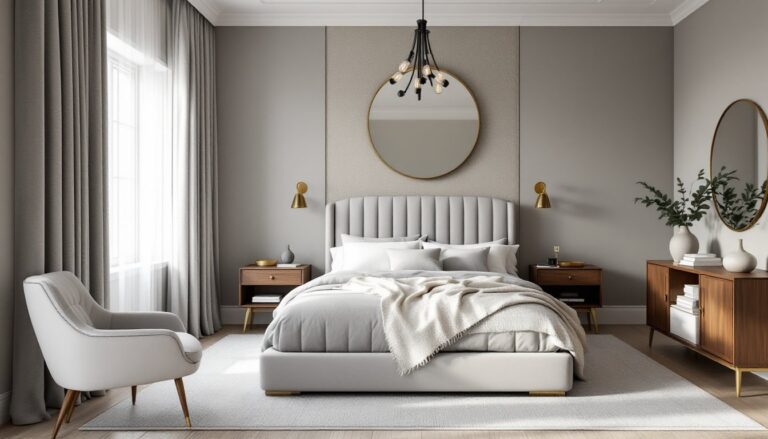
Modern luxury bedrooms share specific characteristics that set them apart from standard decorated spaces. The foundation is simplicity with substance, clean lines, uncluttered surfaces, and a restrained color palette that allows high-quality materials to stand out.
Unlike traditional luxury, which leans on ornate details and heavy furnishings, modern luxury prioritizes negative space, architectural elements, and tactile experiences. Think floor-to-ceiling windows with minimalist treatments, built-in millwork instead of freestanding storage, and statement pieces rather than collections of smaller decor.
The room functions as a sanctuary, not just a sleeping space. This means sound control matters, solid-core doors, quality window seals, and sometimes acoustic panels hidden behind fabric wall treatments. Climate control is precise, often with programmable thermostats or zoned HVAC. Blackout capabilities are standard, whether through motorized shades or layered window treatments.
Materials speak louder than quantity. A single walnut platform bed with book-matched veneers carries more weight than an entire bedroom set in laminate. One piece of original art outweighs a gallery wall of prints. Quality over volume is the operating principle, and that applies to everything from bedding thread count to drawer glides.
Essential Design Elements for Modern Luxury
Color Palettes That Elevate Your Bedroom
Modern luxury bedrooms typically anchor around neutral bases: warm whites, soft grays, warm beiges, or even charcoal and black for dramatic spaces. These aren’t builder-grade off-whites, think premium paint lines like Benjamin Moore Decorator’s White or Farrow & Ball Pavilion Gray that have depth and complexity under different lighting.
Accent colors arrive through textiles and art, not wall paint. A deep emerald velvet headboard against ivory walls, burnt orange linen pillows on a charcoal duvet, or a single ochre throw across a cream upholstered bench. The restraint is intentional, too many competing colors fragment the serene atmosphere luxury bedrooms require.
Monochromatic schemes work exceptionally well in modern settings. Layering shades of taupe, greige, or slate creates visual interest without disrupting calm. If you’re repainting, use the same color in different sheens, matte on ceilings, eggshell on walls, and satin on trim, to add subtle dimension.
Textures and Materials That Add Sophistication
Texture is where modern luxury bedrooms build richness without clutter. Smooth plaster walls contrast with rough linen drapery. Polished marble nightstands sit beside nubby wool area rugs. High-gloss lacquered furniture plays against matte-finished wood floors.
Natural materials dominate: solid hardwoods (walnut, oak, teak), natural stone (marble, limestone, travertine), metals (brushed brass, blackened steel, unlacquered bronze), and organic textiles (linen, wool, silk, cotton percale). Avoid anything that reads synthetic or plasticky, if it doesn’t age well, it doesn’t belong in a luxury space.
Upholstered wall panels add both texture and sound dampening. These can be DIY-installed using 1×4 furring strips, high-density foam, and fabric stapled over plywood backing panels. For a high-end aesthetic commonly seen in designer portfolios, consider channel tufting or simple grid patterns in neutral bouclé or linen.
Layering is critical. Hardwood or engineered flooring gets a wool or viscose area rug. The bed starts with quality sheets (300+ thread count percale or sateen), adds a lightweight duvet or coverlet, layers a throw at the foot, and finishes with a mix of Euro shams and standard pillows in complementary textures.
Furniture Selection for a High-End Modern Look
Modern luxury furniture follows a “less is more” philosophy, but each piece needs to justify its presence through design or function, ideally both. Platform beds with low profiles and integrated nightstands are signature modern elements. Look for beds with substantial headboards that serve as focal points: upholstered panels, live-edge wood slabs, or architectural designs in metal and leather.
Nightstands should match the bed’s visual weight. Floating nightstands work well in tighter spaces and emphasize the clean lines of modern design. If you’re handy, you can build simple floating boxes from ¾-inch plywood with a hardwood veneer, mounted to wall studs with heavy-duty French cleats rated for at least 50 pounds per side.
Dressers and storage pieces benefit from integrated pulls or push-latch mechanisms rather than decorative hardware. Flat-panel or slab-front drawer designs in natural wood or painted finishes keep the look streamlined. Avoid ornate carvings, turned legs, or anything with a traditional silhouette.
Seating adds luxury if space allows. An upholstered bench at the foot of the bed, a pair of accent chairs flanking a small side table, or a chaise lounge near a window all contribute to the sense that the room is designed for living, not just sleeping. Similar to upscale properties that emphasize refined living spaces, the bedroom should feel curated and intentional.
Scale matters. In a 12×14-foot bedroom, a king bed can overwhelm. Measure your space and leave at least 24 inches of clearance on each side of the bed and 36 inches at the foot for comfortable movement. Proportion the furniture to the room, oversized pieces in small spaces kill the serene, uncluttered vibe.
Lighting Strategies to Create Ambiance
Lighting is the single most impactful, and most commonly botched, element in bedroom design. Modern luxury spaces use layered lighting: ambient, task, and accent, all on separate controls (preferably dimmers).
Ambient lighting often comes from recessed LED downlights on dimmers or a statement chandelier or pendant. For recessed lights, space them evenly and use 3000K warm white LEDs to avoid the cold, institutional feel of higher Kelvin temperatures. Avoid placing recessed lights directly over the bed, nobody wants a spotlight on their face at night.
Task lighting handles reading and dressing. Adjustable wall-mounted sconces flanking the bed eliminate the need for table lamps and free up nightstand space. Aim for sconces mounted 18 to 24 inches above the mattress height and 6 to 12 inches out from the edge of the nightstand. If you’re installing new sconces, run wiring during any other electrical work to avoid cutting into finished walls later.
Accent lighting adds drama: LED strips under floating nightstands or the bed frame, picture lights over artwork, or cove lighting in tray ceilings. These are often 12-volt or 24-volt LED systems that can be DIY-installed with basic electrical knowledge, though any hardwired lighting requires pulling permits and may need a licensed electrician depending on local codes.
Window treatments control natural light. Motorized blackout shades paired with sheer drapery panels offer flexibility, full darkness for sleep, filtered light during the day, and the soft texture of fabric to balance hard architectural elements. Designs featured in luxury bedroom galleries often use floor-to-ceiling drapery mounted on concealed tracks for a seamless, elevated appearance.
DIY Upgrades to Achieve Luxury on a Budget
Luxury doesn’t demand unlimited budgets, but it does require smart allocation of resources and a willingness to put in some sweat equity. Here are high-impact projects that deliver outsized results.
Accent Wall Treatments: A feature wall behind the bed instantly elevates the space. Options include:
- Board and batten: Install using 1×2 or 1×3 pine, spaced evenly in a grid or vertical pattern, primed and painted in a monochromatic scheme. Total material cost for a 10-foot-wide wall: $75–$150.
- Shiplap or tongue-and-groove paneling: Real wood or MDF options run $1.50–$4.00 per square foot. Paint in the same color as the walls for subtle texture.
- Venetian plaster or limewash: These require practice but create depth that standard paint can’t match. Expect $3–$6 per square foot in materials for a DIY application.
Upgraded Trim and Millwork: Swapping standard 2¼-inch colonial casing for wider 3½-inch or 5-inch MDF or poplar trim around doors and windows adds architectural weight. Crown molding (even simple 3-inch profiles) draws the eye up and makes ceilings feel taller. Paint all trim in a crisp semi-gloss white for contrast against wall colors.
Custom Closet Systems: A reach-in closet fitted with a modular closet system (brands like ClosetMaid or Rubbermaid offer configurable kits starting around $200–$400) organizes clothing and accessories, reducing bedroom clutter. For walk-ins, DIY systems built from melamine panels, shelf standards, and brackets provide a clean, built-in look for a fraction of custom quotes.
Statement Lighting: Swapping a builder-grade ceiling fan for a modern chandelier or sculptural pendant transforms the room. Fixtures range from $150 to $600+ but installation is straightforward if you’re replacing an existing fixture on the same junction box. Always turn off power at the breaker and verify with a voltage tester before touching wires.
High-Quality Bedding: Luxury hotels use 300–400 thread count percale or sateen in white or neutral tones, not 1,200-thread-count marketing gimmicks (higher thread counts often use lower-quality multi-ply yarns). Invest in good sheets, a down or down-alternative duvet, and quality pillow inserts, these are tactile experiences that matter every single night.
Hardwood or LVP Flooring: If budget allows, replacing carpet with ¾-inch solid hardwood (oak, maple) or luxury vinyl plank in realistic wood tones modernizes the space. Solid hardwood runs $6–$12 per square foot installed: quality LVP runs $3–$6 per square foot. Both are navigable DIY installs for intermediate skill levels, though hardwood requires a table saw or miter saw, a finish nailer, and knowledge of acclimation (let wood adjust to room humidity for 72 hours minimum before install).
Dimmable Smart Lighting: Retrofit existing switches with smart dimmer switches ($30–$60 each) compatible with LED bulbs. You’ll need a neutral wire in the switch box (common in homes built after the 1980s). Dimming capability is essential, it’s the difference between a bedroom and a luxury bedroom.
Projected costs for a comprehensive DIY luxury bedroom upgrade (excluding furniture) in a standard 12×14-foot room range from $1,500 to $4,000, depending on flooring choices and whether you tackle painting and millwork yourself or hire out. Compare that to design-forward homes like those seen in resort-style properties or mountain retreats, where attention to material quality and finish details defines the space.
Safety and Code Notes: Any electrical work beyond swapping fixtures (such as adding circuits or outlets) typically requires permits and may need a licensed electrician per the NEC (National Electrical Code). Structural modifications, removing walls, altering load-bearing elements, are beyond DIY scope and require engineering review and permits. When in doubt, consult your local building department before starting work.